



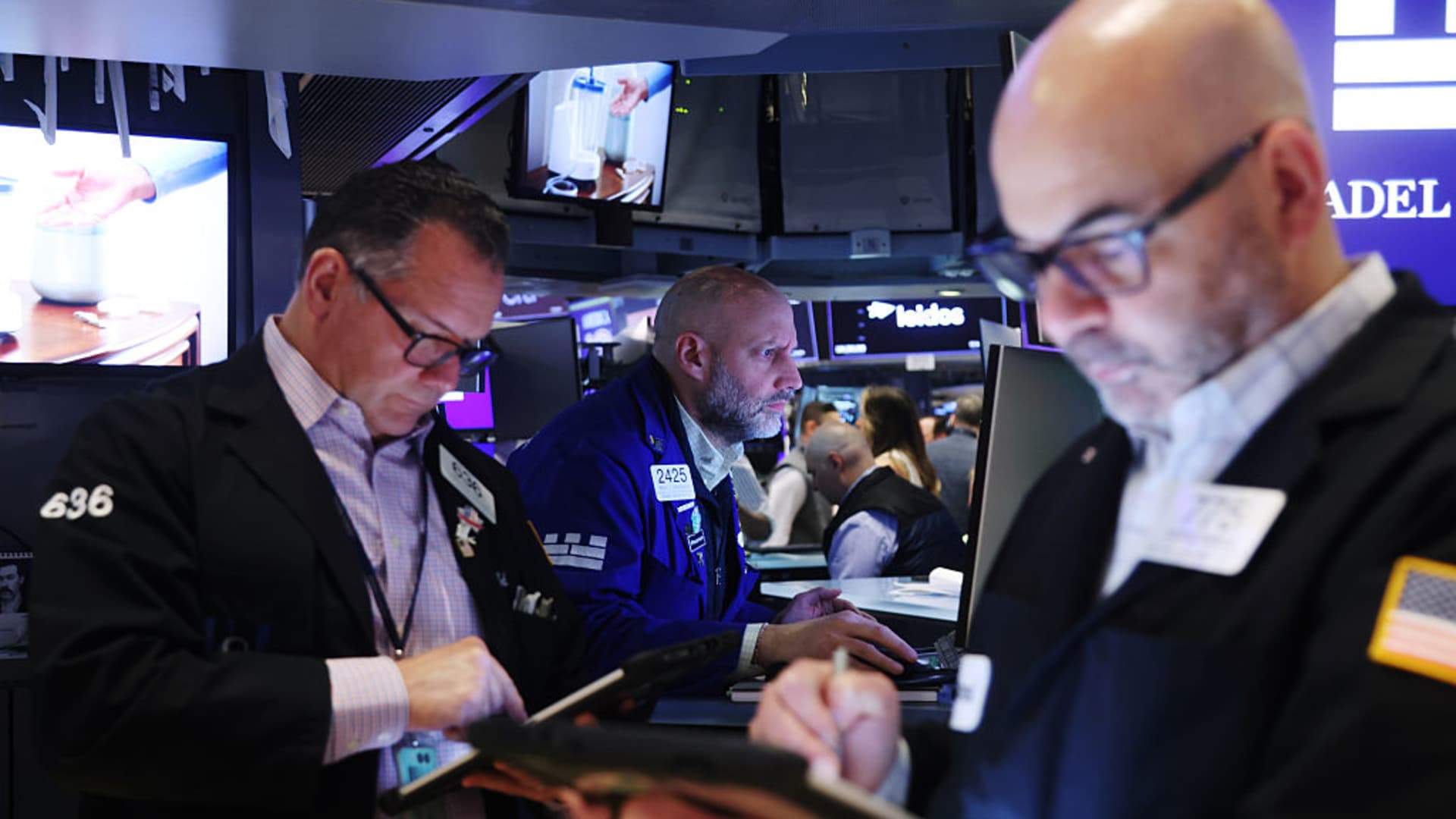
Market Decline amid Surging Oil Prices
Traders experienced a turbulent start to the week as the U.S. oil prices surged past $100 a barrel, prompting fears of a stagflationary environment characterized by rising inflation and stagnant economic growth.
Stock Market Overview
The Dow Jones Industrial Average plummeted by 716 points, marking a significant drop of 1.5%. This dip follows the index’s most considerable weekly decline in nearly a year. Simultaneously, the S&P 500 saw a decrease of 1.2%, while the Nasdaq Composite fell by 1%. The Cboe Volatility Index, known as Wall Street’s fear gauge, crossed 30 for the first time since the market’s tumultuous sell-off driven by tariffs in April 2025.
Soaring Oil Prices
West Texas Intermediate crude oil hit a peak of over $119 per barrel, representing its first breach of the $100 mark since 2022, when markets reacted to geopolitical tensions surrounding Russia’s invasion of Ukraine. Currently, prices are hovering around $101 per barrel after a stunning 11% increase. In the international markets, Brent crude has also climbed to $102 per barrel, echoing similar trends.
Supply Chain Disruptions
The rise in oil futures has been attributed to major Middle Eastern oil producers slashing their output, particularly due to the ongoing closure of the crucial Strait of Hormuz. Both Kuwait and Iraq have reported production cuts, with Iraq’s output plummeting by 70%.
Investor Reactions and Economic Implications
Despite initial volatility, oil prices retracted from their peak following a Financial Times report indicating that G7 officials are contemplating tapping their strategic reserves. However, the anticipated coordinated effort to release reserves is reportedly not yet in place, leaving investors cautious.
Economic Outlook: Concerns of Stagflation
The $100 oil price point is viewed as critical by many investors on Wall Street, raising alarms about its potential impact on the economy unless the ongoing conflict is resolved swiftly. Prominent figures, including former President Trump, have expressed that short-term fluctuations in oil prices are a minor trade-off compared to addressing geopolitical threats.
Analyst Predictions and Market Sentiment
Looking ahead, Ed Yardeni, president and chief investment strategist for Yardeni Research, has stated that a bear market could be on the horizon if investors brace for a repeat of the stagflation era of the 1970s. He emphasized the balancing act facing the Federal Reserve amid growing inflation and rising unemployment rates. Nevertheless, Yardeni remains hopeful that a resolution to the conflict will emerge in the coming weeks, maintaining an optimistic outlook for a technology-driven economic upswing.
As we navigate these uncertain economic waters, market participants will be closely monitoring oil prices and geopolitical developments for any signals that could influence future market trends.
