



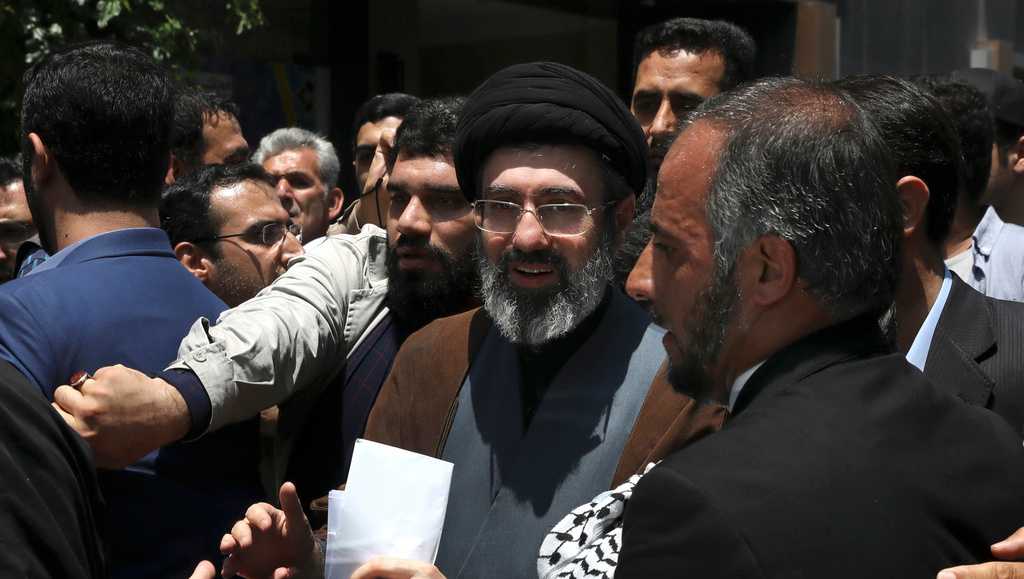
Mojtaba Khamenei Becomes Iran’s Supreme Leader Amid Conflict
Mojtaba Khamenei, son of the late supreme leader of Iran, has been appointed as his successor, according to an announcement from Iranian state television early Monday. This development comes as the conflict ignited by the assassination of his father escalates dramatically.
A New Leader for a Tumultuous Time
The younger Khamenei, who has maintained a low profile since the onset of the war, was seen as a suitable candidate for the role long before the Israeli airstrike that led to his father’s death. Despite lacking any formal government position, he has emerged as a significant figure in Iranian politics.
Assembly of Experts’ Decision
His selection followed indications of division within Iranian officialdom as the nation awaited the Assembly of Experts’ decision. The assembly, a group of clerics responsible for appointing the supreme leader, announced that Khamenei was chosen based on strong votes, calling for national unity behind him. Celebrations erupted in various parts of Tehran as news spread.
Khamenei’s Rising Power
At 56, Mojtaba Khamenei assumes a pivotal role within Iran’s theocratic system. He will have the final say on all state matters, serving as the commander-in-chief of the military and the influential Revolutionary Guard. His authority extends to Iran’s stockpile of highly enriched uranium, raising global concerns about potential nuclear developments.
International Reactions and Criticism
The appointment is likely to draw criticism from the U.S., with President Donald Trump explicitly stating that “Khamenei’s son is unacceptable” and expressing the desire for a leader who can foster peace within Iran. The White House has yet to respond to inquiries regarding this significant shift in leadership.
Regional Impacts and Economic Concerns
As the conflict intensifies, reports have emerged accusing Iran of targeting critical infrastructure, including a desalination plant in Bahrain. This escalation has dire implications for regional water supplies. Concurrently, crude oil prices surged above $100 per barrel, marking the highest levels in over three years, induced by fears over disrupted oil production and transport in the Strait of Hormuz.
Civilian Casualties and Displacement
The war has caused extensive casualties, with at least 1,230 deaths reported in Iran alone. Lebanon has already documented over 397 casualties, while Israel mourns its first soldier losses during this conflict. Furthermore, more than half a million people in Lebanon have been displaced as a result of the ongoing hostilities between Israel and Hezbollah, posing a growing humanitarian crisis in the region.
A Call for Unity and Resilience
As the Iranian President Masoud Pezeshkian calls for neighboring states to refrain from joining U.S. and Israeli assaults, the rhetoric of resilience and unity continues to echo through Iran. The fragile situation remains tense as both sides brace for further confrontations, underscoring the urgent need for diplomatic solutions.
