



Escalation of the Iran War: Latest Strikes and Political Responses
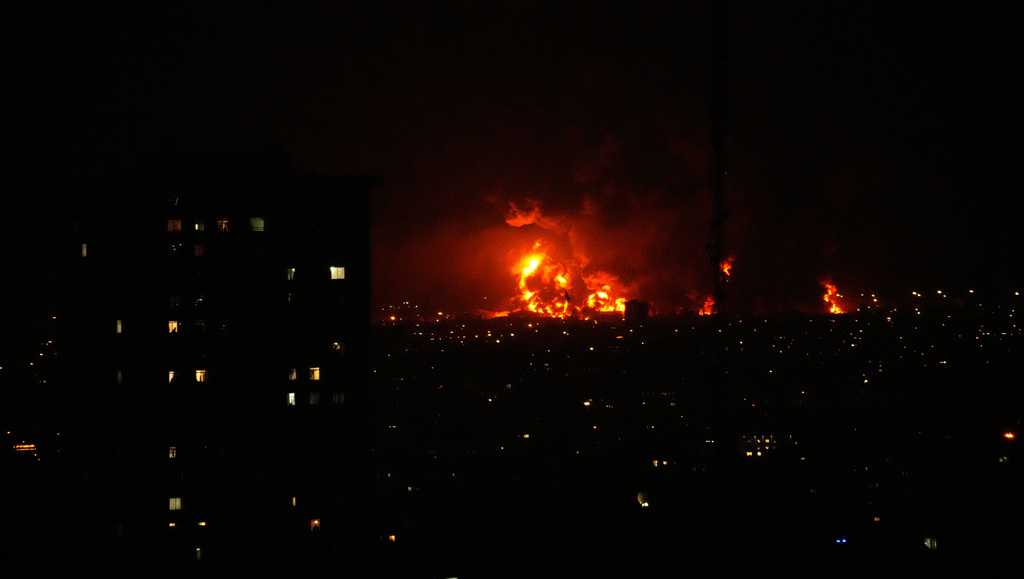
The Iran war escalated dramatically late Saturday, marked by towering flames above an oil storage facility in Tehran. Israeli Prime Minister Benjamin Netanyahu hinted at “many surprises” in the conflict’s next phase, as tensions intensified within the region.
Iranian state media confirmed the strikes, while footage from the Associated Press showcased a glowing horizon. Just as Israel’s military confirmed the attack, neighborhoods in eastern and southern Tehran experienced tremors, although specific targets were not disclosed.
This incident marks a notable shift, as it seems to be the first targeting of a civil industrial facility during the ongoing conflict. State media placed the blame on “an attack from the U.S. and the Zionist regime,” emphasizing the facility’s role in supplying oil to Tehran and adjacent provinces.
Iran’s Leadership: A Divided Front
Earlier that day, Iranian President Masoud Pezeshkian extended an apology for Iran’s attacks on neighboring countries. Despite this, missile launches and drone strikes continued toward Gulf Arab states, with hard-liners insisting that Tehran’s wartime strategy would remain unchanged. This internal struggle complicates any diplomatic attempts, as a rift emerges between pragmatic politicians seeking de-escalation and hardliners committed to confrontation against the U.S. and Israel.
U.S. Threats and Responses
In response to the escalating hostilities, U.S. President Donald Trump declared that Iran would face “severe” consequences, and that more areas could soon become targets. These developments have rattled global markets and significantly weakened Iran’s leadership amid relentless Israeli and American airstrikes.
Alongside his apology, Pezeshkian dismissed Trump’s demand for unconditional surrender, asserting it was a “dream they should take to their grave.” His hastily delivered message underscored the limited control of Iranian leadership over the Revolutionary Guard, which continues to operate independently.
The Impact of Military Strikes
Recent video footage revealed explosions over western Tehran as Israel executed further strikes, reportedly targeting an airport used to transfer supplies to militant groups. A university student from Tehran expressed fear, stating, “Tehran is under severe bombardment,” indicating how far-reaching the impact of these strikes has been on civilians.
International Ramifications and Casualties
The ongoing hostilities have resulted in significant casualties, with at least 1,230 people reported dead in Iran alone, alongside more than 290 in Lebanon and 11 in Israel. Six U.S. troops have also lost their lives. Incoming missile threats have prompted residents in Israel to seek shelter amidst rising fears of potential strikes.
Regional Attacks on U.S. Interests
In a separate but related event, reports surfaced of a missile landing within the U.S. embassy compound in Baghdad. Iraqi officials labeled this incident a “terrorist act,” showcasing the broader implications of the conflict throughout the Middle East.
Ongoing Tensions in the Gulf
As the conflict progresses, U.S. allies in the Gulf have expressed frustration over not receiving ample preparation time for the war. Meanwhile, further hostilities have echoed across the region, with strikes targeting Bahrain, Saudi Arabia, and Dubai. Authorities are on high alert as the escalation continues to unfold.
The situation remains dynamic as we await further developments in the Iran war and assess its impact on regional and global stability.
