



Revanth Reddy’s Image Enhanced by Maoist Leaders’ Surrender
Introduction to the Surrender
The recent surrender of prominent Maoist leaders, including party general secretary Thippiri Tirupathi (Devji) and central committee member Malla Raji Reddy (Sangram), before the Telangana police is seen as a significant boost to Chief Minister A. Revanth Reddy’s public image. Analysts suggest this event heralds a new approach to handling Maoist insurgency in the state.
Meeting with Surrendered Leaders
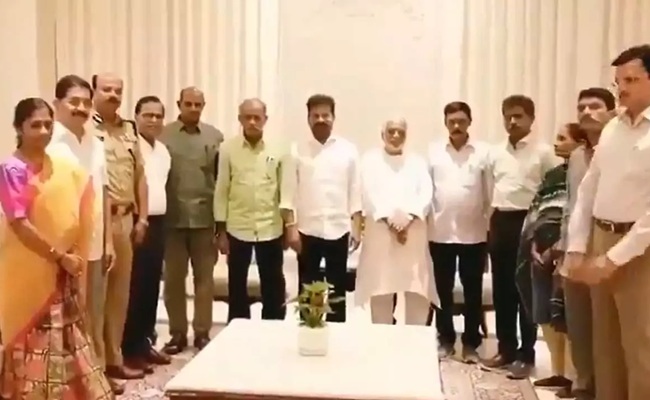
In an effort to enhance his standing, Revanth Reddy held a meeting with the surrendered Maoist leaders, assuring them that the government is committed to helping them reintegrate into society with dignity. This engagement marks a stark contrast to practices in other states, such as Andhra Pradesh, where local police often resort to violent encounters with Maoists.
A Unique Approach to Rehabilitation
Rather than eliminating threats, the Revanth Reddy administration has offered top leaders a pathway to renounce violence and engage in democratic politics. During the meeting, leaders expressed their readiness to formally abandon armed conflict and disband the People’s Liberation Guerrilla Army (PLGA) if provided federal support.
Transforming the Maoist Organization
The leaders proposed restructuring their organization into a political entity operating within constitutional parameters. They articulated that, given the current socio-political landscape, continuing armed rebellion is unsustainable. Instead, they prefer to pursue their ideological goals through democratic means.
Government Support and Promises
Revanth Reddy indicated his intention to communicate with Union Home Minister Amit Shah to explore potential avenues for a structured dialogue. However, he made it clear that decisions regarding political recognition are ultimately at the Centre’s discretion. The surrendered leaders requested comparable reward packages, housing, agricultural land, and health care coverage.
Chief Minister’s Assurance
The Chief Minister granted immediate health care coverage under the Aarogyasri scheme and directed the Director General of Police to evaluate reward structures from other states. However, he noted that providing agricultural land would not be feasible, emphasizing the government’s commitment to the safety and integration of the surrendered leaders into mainstream society.
Symbolic Significance of the Meeting
This meeting is viewed by political observers as a significant step towards framing rehabilitation not merely as an act of surrender but as an organized political reintegration. It reflects the government’s broader strategy to move toward a more peaceful resolution of long-standing conflicts.
