



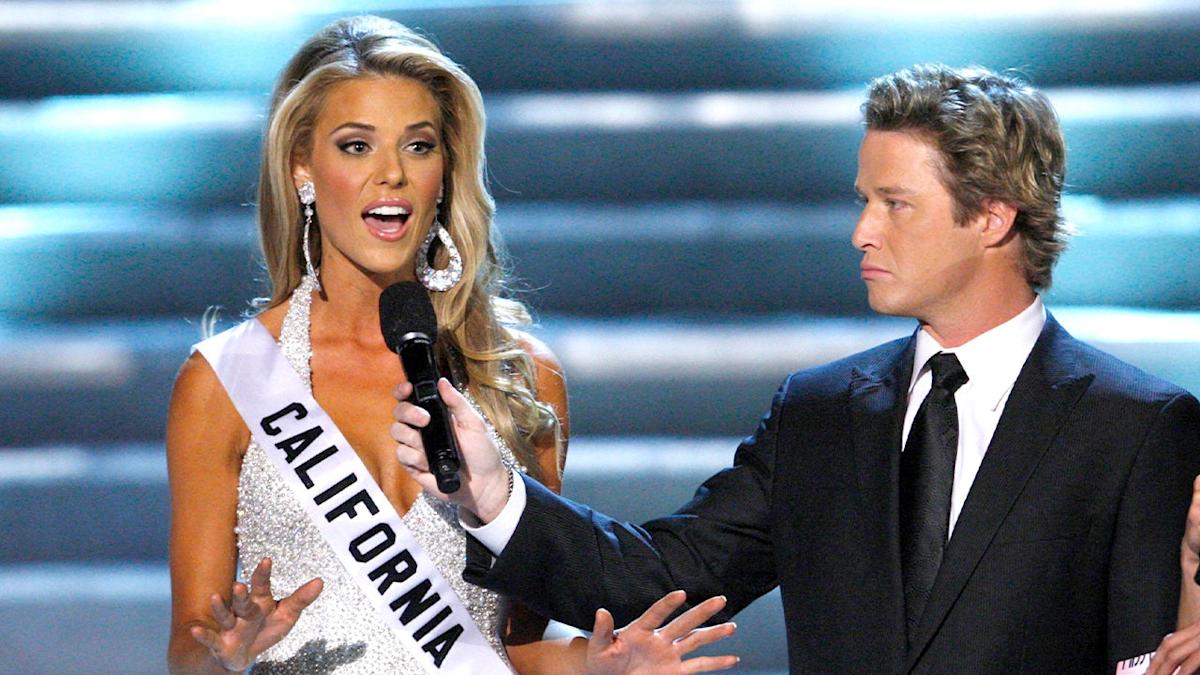
Controversy Surrounds Carrie Prejean Boller’s Dismissal from White House Religious Council
The Trump administration’s decision to remove Carrie Prejean Boller from the White House Religious Liberty Commission has stirred significant conversation, particularly concerning her alleged attempt to “hijack” a hearing on antisemitism. This move has garnered support from various religious leaders and conservative commentators.
The Ouster: Reactions and Context
A former official from Trump’s White House expressed relief, stating, “Carrie Prejean was thrown off the Religious Liberty Commission, and thank God.” This reaction underscores the belief that such commissions should solely focus on advancing the President’s agenda rather than serving personal agendas.
Incident at the Hearing
Prejean Boller, who gained fame as Miss California USA in 2009, faced immediate backlash after she attempted to divert the focus of a hearing held on combating antisemitism at the Museum of the Bible in Washington, D.C. During this session, she wore a Palestinian flag pin and engaged in heated exchanges that detracted from the intended purpose of the gathering.
Religious Identity and Controversial Remarks
Since converting to Catholicism from evangelical Christianity, Prejean Boller has made contentious statements regarding Zionism, claiming, “Catholics don’t embrace Zionism.” These remarks prompted swift criticism from leaders within the Catholic community, emphasizing that her views do not reflect the broader beliefs of Catholic individuals, many of whom support the state of Israel.
Support and Criticism from Political Figures
Further complicating her position, figures such as Texas Republican Senator Ted Cruz criticized her for mixing personal political agendas with a forum intended for discussing religious freedoms. Cruz remarked on social media that associating Catholicism with antisemitism is a misunderstanding perpetuated in modern discourse.
Defending Her Stance
In her defense, Prejean Boller has maintained that she “will never bend the knee to the state of Israel” and described how many Christians have been manipulated into failing to recognize the suffering caused by military actions. Her statements have generated a range of reactions from the public, with conservative audiences celebrating her dismissal while others criticize her views.
Conclusion: A Divided Response
As the controversy continues to unfold, the responses illustrate a broader national discourse on religion, politics, and antisemitism. The debate around Carrie Prejean Boller emphasizes the complexities of faith and advocacy in the context of contemporary political issues, as well as the challenges that arise when personal beliefs come into conflict with broader organizational missions.
