



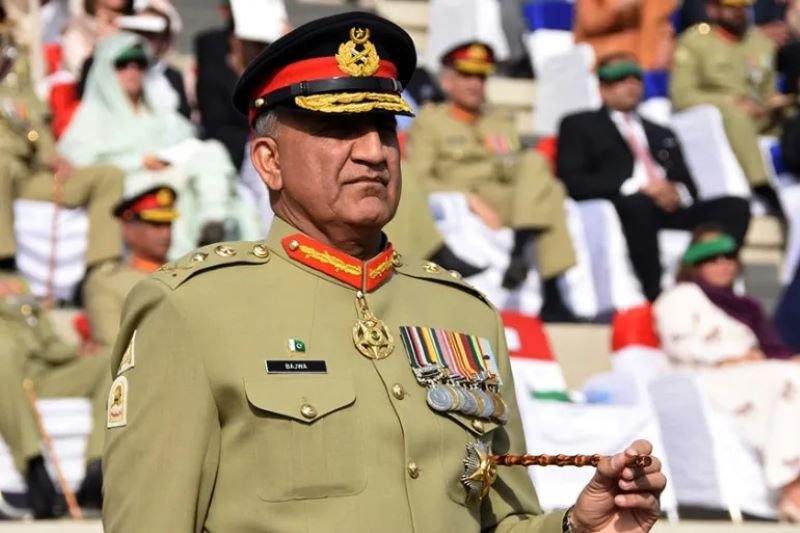
Former Pakistan Army Chief General Qamar Javed Bajwa Admitted to Hospital
Date: [Insert Date]
Details of the Incident
Former Chief of Army Staff, General (retd) Qamar Javed Bajwa, has been hospitalized at the Combined Military Hospital (CMH) following an accident at his residence. The military’s media wing confirmed this news on Thursday.
Medical Condition
According to a statement from the Inter-Services Public Relations (ISPR), General Bajwa is currently receiving medical treatment at CMH. However, no additional information regarding his condition has been disclosed.
Nature of Injuries
A report indicated that the general sustained a head injury after slipping in his bathroom around 4:30 AM on Tuesday. Following the fall, he was swiftly transported to the hospital, where he has been admitted to the intensive care unit (ICU) for observation and necessary medical treatment.
Career Highlights
General Bajwa served as Pakistan’s Chief of Army Staff from November 2016 until his retirement on November 29, 2022. Prior to his tenure as army chief, he held significant positions, including Inspector General of Training and Evaluation at General Headquarters (GHQ).
Distinguished Military Background
Throughout his distinguished career, General Bajwa has taken on various key operational and staff roles. His experience includes serving as a General Staff Officer at the 10 Corps and leading a brigade in a United Nations peacekeeping mission in the Democratic Republic of Congo.
Leadership and Legacy
As part of the Baloch Regiment, General Bajwa follows in the footsteps of several notable army chiefs, including Generals Yahya Khan, Mirza Aslam Beg, and Ashfaq Parvez Kayani. His leadership has played a crucial role in shaping military strategies and approaches during his tenure.
Looking Ahead
As General Bajwa continues to receive treatment, the military community and the nation remain hopeful for his swift recovery. His contributions to Pakistan’s defense infrastructure will not be easily forgotten, and his legacy continues to inspire future generations of military leaders.
