



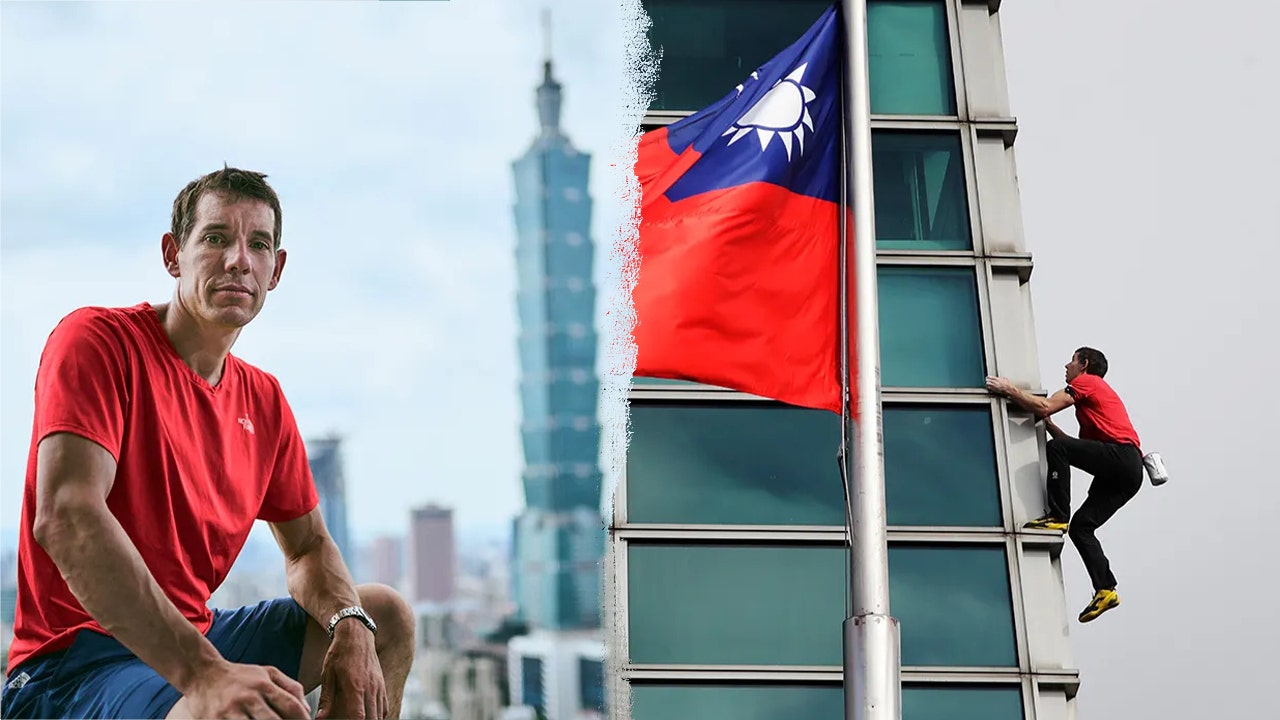
Alex Honnold’s Daring Climb of Taipei 101: A Study in Fearlessness
NEW Experience the thrill of Fox News articles now available in audio format!
Professional rock climber Alex Honnold recently captivated audiences with an exhilarating urban ascent in Taiwan, climbing the iconic Taipei 101 skyscraper.
An Audacious Climb
On January 25, Honnold scaled the 101-story structure without any ropes or protective gear. The remarkable feat was streamed live on Netflix, garnering widespread attention across various media platforms.
Victory at the Summit
Honnold completed his ascent in just one hour and 31 minutes, celebrating his victory by waving his arms at the summit. Despite challenging wind conditions, he described the panoramic view from the top as “amazing.”
Understanding the Fearlessness
As a renowned climber, Honnold has tackled some of the most daunting cliffs and mountains, including Greenland’s sea cliffs, which dwarf even the Empire State Building. In a fascinating 2016 experiment, neuroscientist Jane Joseph studied his brain to understand his inclination towards risk-taking behavior.
Brain Activity Insights
Joseph, a pioneer in using fMRI scans on “high sensation seekers,” discovered that Honnold’s amygdala showed minimal activity when exposed to fear-inducing images. His brain scans revealed virtually no responsiveness in areas typically activated by fear, a finding that highlights his unique neurological profile.
The Unique Neurobiology of Extreme Athletes
Dr. Daniel Amen, an expert in brain imaging, emphasizes that many extreme athletes and thrill-seekers exhibit reduced baseline activity in the prefrontal cortex, which governs fear inhibition and risk assessment. These individuals often demonstrate a heightened activation of reward pathways, making them less susceptible to fear and more driven by challenges.
Elite Performers and Brain Functionality
Dr. Amen indicates that highly skilled performers like Honnold possess extraordinary top-down control. Their prefrontal cortex remains engaged during high-pressure situations, allowing for calm decision-making. This contrasts sharply with the average person’s experience, where heightened adrenaline typically leads to anxiety and impaired judgment.
Conclusion: The Science of Thrill-Seeking
Alex Honnold’s awe-inspiring ascent of Taipei 101 offers a glimpse into the extraordinary psychology and neurobiology of extreme athletes. While most individuals may feel overwhelmed by fear, Honnold’s brain operates with precision and effectiveness under pressure, enabling him to conquer challenges that remain beyond reach for the average person.
