



Western Digital Announces Strategic Company Split in Late 2023
In late 2023, Western Digital, a prominent storage solutions provider, revealed its plans to reorganize into two distinct companies. The original company will retain the Western Digital name and will focus primarily on traditional spinning hard drives, which, although less prevalent in consumer markets, continue to play a vital role in NAS devices and data centers. Meanwhile, the newly branded entity, SanDisk, will manage solid-state storage solutions, catering to consumers through its recognized product lines including Blue, Black, Green, and Red brands.
The Impact of the Split on the Storage Industry
This strategic division effectively reverses the integration that took place a decade ago when Western Digital acquired SanDisk for a staggering $19 billion. As the split unfolds, we are beginning to observe its implications on the existing consumer storage offerings, particularly the SSDs (solid-state drives) that many users rely on for enhanced performance and robustness.
Transition to SanDisk Branding for SSDs
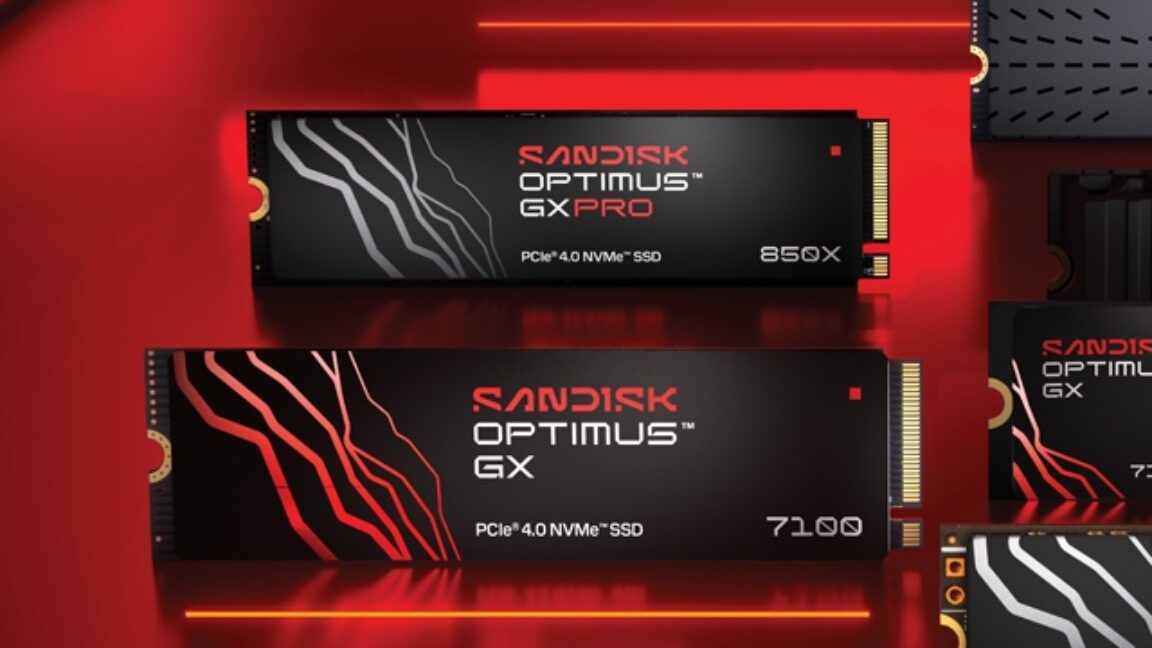
Recently, SanDisk announced the discontinuation of its mainstream WD Blue and WD Black SSDs. These popular models will transition to the new SanDisk Optimus branding, maintaining their model numbers. This change marks a significant shift in how these drives will be marketed and perceived in the consumer market.
Details of the New SanDisk Optimus Drives
The transformation of the WD Blue series drives into “SanDisk Optimus” drives begins with the introduction of the Optimus 5100, which is essentially a rebadged version of the previous WD Blue SN5100. Additionally, mid-tier WD Black drives will now carry the SanDisk Optimus GX branding, with the Optimus GX 7100 replacing the WD Black SN7100. For high-performance users, the leading WD Black variants will evolve into “SanDisk Optimus GX Pro” SSDs, incorporating the Optimus GX Pro 850X and 8100 models to replace their predecessors.
Performance Insights: Understanding Drive Differences
While the average user may not notice a significant difference between the entry-level WD Blue/Optimus drives and the high-end WD Black/Optimus GX Pro SSDs, the underlying technology continues to differ. The Blue/Optimus 5100 employs quad-level cell (QLC) flash memory, which is generally slower and less durable compared to the triple-level cell (TLC) memory found in the Black/Optimus GX 7100 drives.
Enhanced Features for High-End Users
For those seeking maximum performance, the Black/Optimus GX Pro 8100 achieves higher speeds by utilizing a PCIe 5.0 interface, as opposed to the PCIe 4.0 standard found in the 5100 and 7100 models. Additionally, the GX Pro drives come equipped with a dedicated DRAM cache, while the lower-tier models leverage a portion of the system RAM as a Host Memory Buffer (HMB) for improved efficiency.
Conclusion: A New Era for Western Digital and SanDisk
The rebranding and restructuring of Western Digital into two distinct entities signify a pivotal moment in the storage industry. As these changes take root, consumers can look forward to more specialized products tailored to their unique storage needs, whether they require traditional hard drives for data centers or advanced SSD solutions for personal computing. This split presents an opportunity for innovation and growth, ensuring that both brands remain competitive in an ever-evolving market.
