



U.S. Embassy Monitoring Coupang CEO Controversy
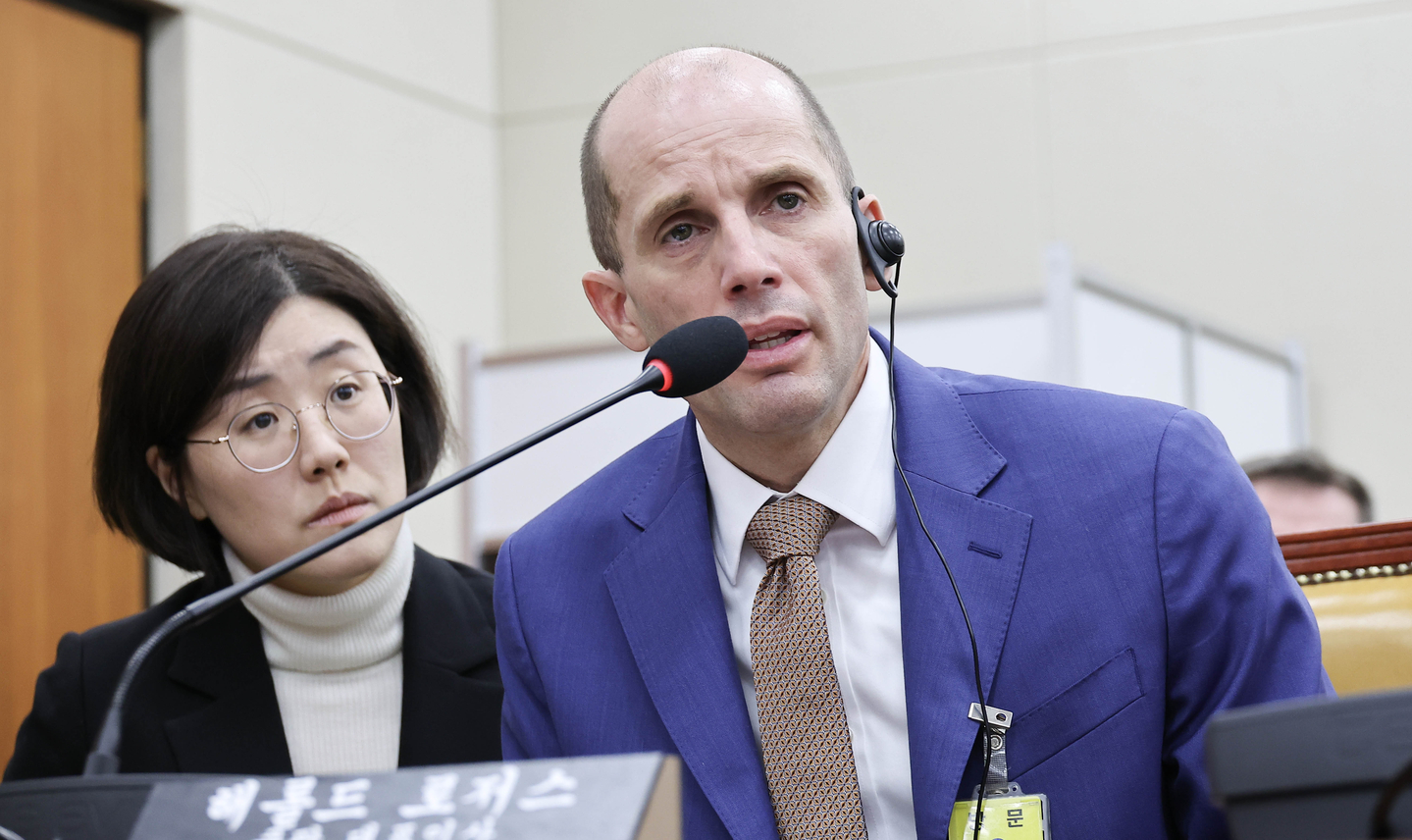
Harold Rogers, interim Coupang CEO, speaks at the National Assembly’s Science, ICT, Broadcasting and Communications Committee in western Seoul on Dec. 31, 2025. [LIM HYUN-DONG]
The U.S. Embassy in Seoul is closely monitoring the unfolding situation regarding the National Assembly’s decision to file a complaint against Harold Rogers, the interim CEO of Coupang’s Korean division. The embassy stated it is aware of the developments and is keeping an eye on the matter closely, amid rising concerns over the implications of the complaint, which involves a U.S. citizen.
Complaint Filed Against Coupang Executives
On December 31, 2025, the Science, ICT, Broadcasting and Communications Committee of the National Assembly voted to file complaints against seven current and former executives of Coupang, including Chairman Bom Kim and Harold Rogers. The charges are based on alleged violations of the Act on Testimony and Appraisal Before the National Assembly.
The committee’s decision centers around failure to appear at a parliamentary hearing, with specific charges applied to Kim, Coupang Vice President Kim Yoo-seok, and former CEO Kang Han-seung. Additionally, Rogers, alongside former CEO Park Dae-jun, Vice President Cho Yong-woo, and auditor Yoon Hye-young, will face allegations of perjury and related violations under the same law.
Implications of the U.S. Embassy’s Monitoring
In diplomatic terminology, the phrase “closely monitoring related developments” signals the sensitivity and potential ramifications of the situation. Although it does not explicitly express concern, such language typically suggests that the U.S. Embassy is attentive to how the National Assembly’s actions may affect international relations and the interests of American citizens abroad.
Coupang’s Public Relations Campaign
Coupang has initiated a public relations campaign aimed at the U.S. audience, asserting that it has faced undue criticism following a significant data breach incident. There are growing apprehensions in the United States regarding the National Assembly’s move to summon a U.S. citizen and launch criminal complaints based on allegations that have yet to be legally substantiated.
Motivation Behind the Complaint
The National Assembly’s complaint against Rogers stemmed from a request by the National Intelligence Service (NIS), which accused him of perjury during a recent hearing. Rogers claimed that he conducted an investigation into the data breach at the instruction of the NIS—a statement the agency has labeled as “clearly false.”
Coupang and NIS Dispute
While Coupang asserts that it followed the NIS’s directives during its internal investigation, the NIS contends that it did not issue official instructions but engaged in “working-level consultations” to address a national security concern. The agency emphasized its objective was simply to collect and analyze information regarding a large-scale personal data breach involving a foreign national.
As the situation continues to evolve, both Coupang and the U.S. Embassy remain key players in this controversy, highlighting the intersection of international business operations and governmental oversight.
BY PARK HYUN-JU
