



Khaleda Zia’s State Funeral: A Nation in Mourning
Mourners gather in Dhaka to pay their respects to Bangladesh’s first female Prime Minister
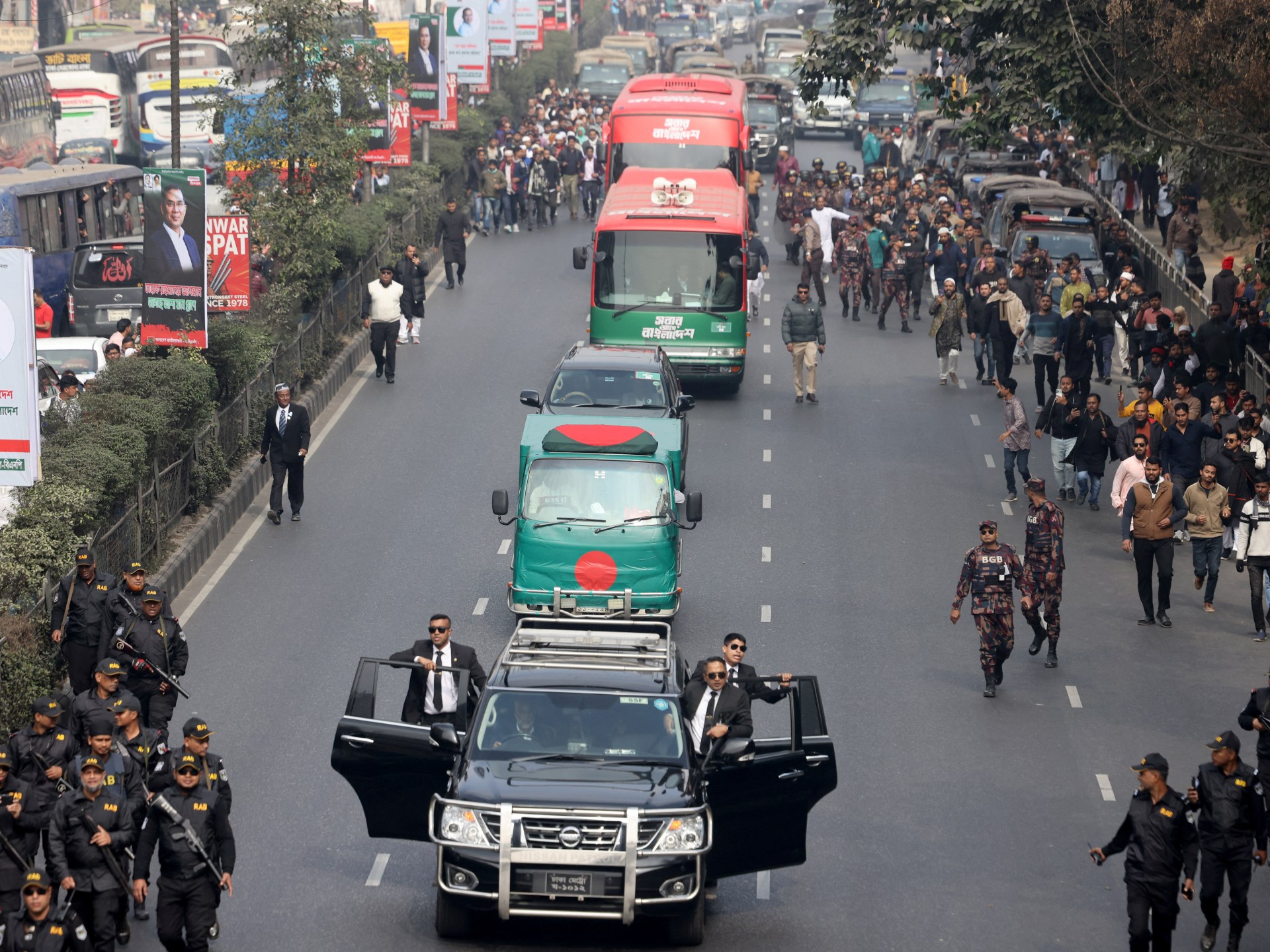
Massive crowds converged in the capital city of Dhaka for the state funeral of former Prime Minister Khaleda Zia, who left an indelible mark on Bangladesh’s political landscape. Mourners from all corners of the country came to bid farewell to a leader who inspired many.
Footage captured the overwhelming scene as thousands streamed towards the national parliament building on Manik Mia Avenue, where Zia’s coffin draped in the national flag arrived amidst somber tributes on Wednesday.
Expected to be attended by hundreds of thousands, the state funeral drew supporters and dignitaries, including officials from India and Pakistan. Approximately 10,000 security personnel were deployed to ensure the safety and order of the event, reflecting the importance of this occasion.
Khaleda Zia, the first woman to become Prime Minister in Bangladesh when she took office in 1991, passed away at the age of 79 following a prolonged illness. In her honor, Bangladesh has declared three days of state mourning, while global leaders have extended their condolences, recognizing her role in the country’s democratic movement.
Emotional Farewell
Reporting from outside the parliament, Al Jazeera’s Tanvir Chowdhury shared insights into the emotional atmosphere as mourners gathered for the state funeral. “Many people are weeping,” he noted, highlighting the deep grief felt across the nation.
Attendees voiced their admiration for Zia, describing her as “a great leader for this country,” and acknowledging her significant role in guiding Bangladesh towards democracy. “An entire nation is grieving,” Chowdhury added, emphasizing the collective loss felt by many.
A Lasting Legacy
Many mourners articulated their sentiments about Zia’s impact. One attendee, Sharmina Siraj, reflected on Zia’s inspirational leadership and the challenges women still face in political spheres. She noted that initiatives introduced by Zia to support girls’ education significantly benefited future generations.
Minhaz Uddin, a retired government official, remarked on the importance of paying respects to such a veteran politician, despite never having voted for her. “I came here with my grandson, just to say goodbye to a leader whose contributions will always be remembered,” Uddin stated.
Guidance Amidst Adversity
Khaleda Zia’s son, Tarique Rahman, returned to Bangladesh after 17 years in self-imposed exile to honor his mother’s legacy. He expressed that the nation is mourning “the loss of a guiding presence that shaped its democratic aspirations.” Rahman acknowledged the hardships his mother faced, including arrests and persecution, but praised her unyielding resilience.
The acting chairman of the Bangladesh Nationalist Party, Rahman may also seek the role of Prime Minister should his party succeed in the upcoming elections in February.
International Tributes
In addition to local mourners, the Indian government confirmed Foreign Minister Subrahmanyam Jaishankar’s attendance at the funeral, marking the senior-most visit from an Indian official since former Prime Minister Sheikh Hasina, a political rival of Zia, was overthrown. Senior officials from Pakistan are also expected to honor Zia’s memory.
Khaleda Zia’s body will be laid to rest in a park near the parliament building, alongside her late husband, Ziaur Rahman, who was assassinated during his presidential tenure in 1981, solidifying a historical bond between the two leaders.
