



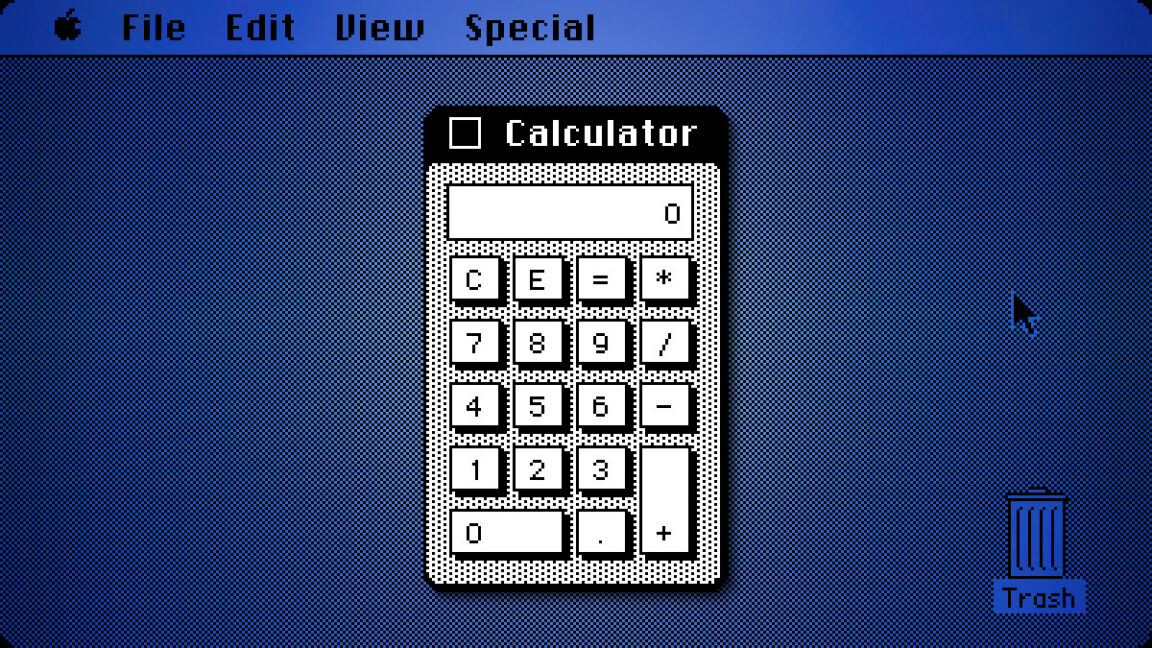
The Innovative Approach Behind the Mac Calculator Design
In a bid to break free from the endless cycle of design revisions, Espinosa adopted a fresh strategy for the Macintosh calculator. Rather than relying on verbal communication for design preferences, he developed an innovative program that allowed the visual parameters of the calculator to be adjusted through easy-to-use pull-down menus. This included options for line thickness, button sizes, background patterns, and more.
When Steve Jobs engaged with this new tool, he efficiently spent merely ten minutes tweaking various settings until he discovered a combination that met his vision. This hands-on approach proved highly effective. By providing Jobs direct control over visual parameters, he was able to swiftly shape a design that met his satisfaction. Hertzfeld, another member of the Macintosh team, later implemented this design, which was informed entirely by Jobs’s adjustments during that brief session.
Design Implementation and Longevity
The outcome of Jobs’s ten-minute design session led to the calculator’s interface that debuted with the Mac in 1984. This design remained largely unchanged throughout the lifespan of Mac OS 9, continuing until Apple transitioned to Mac OS X in 2001. This marked the end of an impressive 17-year run for the original calculator as the primary interface for Mac users, showcasing the effectiveness of the design established during that crucial period.
Lessons in Visual Tools
Espinosa’s creation of the Construction Set was a significant early example of what has since become a staple in software development: the use of visual and parameterized design tools. In 1982, when most personal computers were still limited to monochrome text displays, the concept of enabling users to adjust visual parameters interactively was groundbreaking. This innovative approach paved the way for later advancements, such as HyperCard, which solidified the idea into a full-fledged visual application framework.
Understanding Jobs’s Management Style
The simplistic yet powerful calculator design tool also sheds light on Steve Jobs’s management style. While he often had a clear vision of what he wanted, articulating those ideas could be challenging. By empowering him with hands-on manipulation capabilities, Espinosa effectively bypassed communication barriers, facilitating a smoother design process. This hands-on method would become even more prominent in Jobs’s later work when he returned to Apple in the late 1990s, where he famously preferred to evaluate products based on direct user interaction rather than through polished presentations.
Enduring Legacy of the Calculator Design
The remarkable durability of the design established during that brief ten-minute session exemplifies the success of this approach. The calculator not only survived nearly two decades of Mac OS updates but also remained a simple yet effective tool, outlasting many more complicated design elements introduced over the years. What began as a workaround evolved into one of the Macintosh’s most iconic and enduring designs.
Explore the Original Mac OS Calculator
If you’re curious about experiencing the original Macintosh calculator, you can easily do so. Thanks to platforms like Infinite Mac, it’s possible to run various versions of the Mac OS in your browser, allowing you to explore the nostalgic features that shaped an era of computing.
